
(Make a fresh mug—this one’s meant to be read, not skimmed.)
Prelude: The Tightrope No One Trains Us For
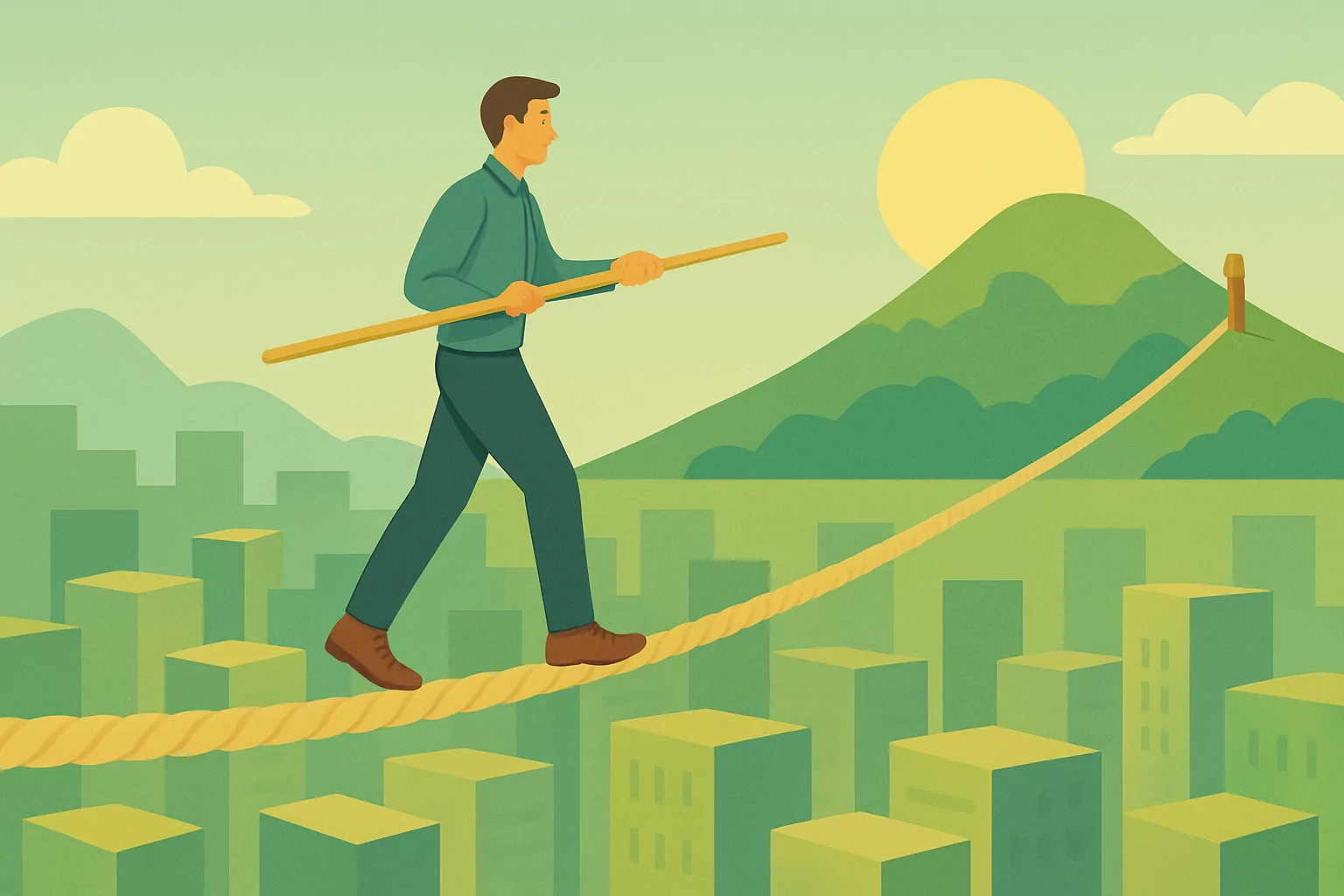
Most of us arrive at work armed with technical chops, a few role‑model stories, and the vague belief that “being professional” is the same as never showing emotion. Then reality walks in—tired colleagues, anxious clients, lives derailed by illness or toddlers or a phone call at 2 a.m. Suddenly the tightrope appears: deliver results and stay unmistakably human. Slip too far toward cold efficiency and trust evaporates; tumble into endless empathy and deadlines dissolve. Nobody hands you a pole for balance. You build one out of lived moments—often the messy kind.
Moment One: A Shaky Interview and a Chance Taken
Back when I was a first‑time manager, I interviewed a young man for an entry‑level developer role. On paper he looked eager, but he had almost no real‑world experience—so little that even the junior post would have stretched him. It would have been easy to thank him for his time and move on.
Instead, I invited him to stay in touch. We caught up once a month at first—small coding puzzles, mock interview drills, little nudges on his résumé. As his skills grew our sessions naturally spaced out; we never ended, we just spoke less because he needed me less. In time he stepped into his first developer role and kept climbing. No confetti, no grand thank‑you—just the quiet satisfaction of watching someone find their footing.
Lesson: You can say no to a job and still say yes to the person, and the payoff isn’t applause—it’s progress.
Moment Two: Pressure in a Family Boardroom
A decade earlier, I was parachuted into a family‑run manufacturing company to steer a systems overhaul. Legacy machinery, razor‑thin margins, and a board filled with relatives—pressure baked into every agenda. Mid‑engagement, whispers circulated about the CEO dealing with a personal crisis. He never named it, but you could see the strain: clipped answers, restless eyes, shoulders locked higher each meeting.
Reading the room, I slid a re‑sequenced timeline across the table and said, “I think we can take some pressure out of the board room by reshaping our approach, which feels like we’d all benefit from.” We pulled forward work he didn’t need to touch, delayed the heavy approvals, and built a four‑week buffer.
The roadmap stretched, yet we still landed on budget. The biggest shift wasn’t financial—it was the boardroom decibel level dropping, giving the CEO space to breathe. No hero confetti, just a team that slept a little better and hit the revised line.
Moment Three: When My Daughter Arrived and the Wheels Wobbled
Years before the manufacturing project, my world tilted for the better—our daughter was born. Overnight I tried to be everywhere for everyone: taking my rightful turn with her, work deadlines, calls at work squeezed between nappy (diaper) changes. Four‑hour sleeps became normal; “quick email checks” turned into midnight proposal rewrites. And before long I was working through the night in the office once per week, but only after everyone in the family was away to bed, before coming back home for breakfast and then out to work.
For months I told myself this was commitment. In reality it was erosion—of patience, health, and joy. The slide is sneaky: first you skip lunch, then you skip laughter, then you skip noticing the sky outside the office window has turned to night.
I was lucky, I had a boss who believed in family, in balance, and that work can wait sometimes. He was there for me when I needed him, and called out what he saw as a very bad thing. Bill is very much a big part of why I am the way I am today. So thanks Bill.
Since then, vulnerability has been non‑negotiable, regardless of who I’m talking with, or their level, in the business. People need to know it’s OK not to be OK—and that professionalism isn’t crushed by honesty; it’s fortified by it.
What These Stories Whisper
- Skill wins the sprint; humanity wins the marathon. No one remembers your perfect slide deck if they never felt safe telling you it was wrong.
- Boundaries aren’t barriers. Clear roles and timelines keep empathy from turning to chaos.
- Vulnerability scales when leaders go first. A single honest admission can grant a whole team permission to breathe.
Research, Spoken Softly
I won’t drown you in citations, but two datapoints keep me honest:
- Google’s Project Aristotle—teams with high psychological safety outperformed others, even when the others had higher aggregate IQs.
- Harvard Business Review, 2022—employees who reported “safe, caring” cultures were 31 % more likely to meet performance goals and 57 % less likely to seek a new job.
Translation: Humanity isn’t a detour; it’s the highway.
Signals I Watch For (Bullet‑ish, Not a Blueprint)
- Eyes flick to the floor when you ask for updates? Your “approachability” sign is probably dim.
- Laughter dies the moment you enter the room? Check the professionalism dial—people may fear correction more than enjoying collaboration.
- Slack goes silent after 6 p.m. because no one trusts “offline” isn’t code for “working secretly”? Time to model real cut‑off.
Notice, adjust, repeat. Jazz, not sheet music.
The Three Quiet Questions (Daily Reflection)
- Would I trust me if the roles were flipped?
- Have I signalled it’s safe to bring me the ugly bits?
- Does this moment need steel, silk, or both?
Leader’s Daily Gut‑Check
- Human Gesture: Did I make one authentic, caring move today?
- Professional Anchor: Did I reinforce at least one clear standard?
- Invitation: Did I react constructively to input or bad news?
- Closure: Did I close the loop on a commitment from yesterday?
Try This (No Guarantee, High Reward)
Next time your calendar pings “1‑on‑1” or “status call,” take 90 seconds:
- Close the laptop.
- Ask yourself the three questions.
- Walk into the conversation choosing one human signal (a genuine “How are you?” that waits for an answer) and one professional anchor (a clear next step by a clear date).
- Leave the meeting only after both have landed.
It’ll feel slow the first time. Then you’ll watch turnaround shrink because issues surface early.
Final Word (for Today)
Work isn’t the pub—but neither is it a robot assembly line. It’s a messy, breathing place where hope, fear, ego, and spreadsheets collide. Professionalism is the scaffolding; humanity is the electricity. Take away either and the building stays dark. Keep both and the lights stay on long after the launch party.
If you test any of this, drop me a note. Tell me where you wobbled, where you surprised yourself, where you saw someone else grow because you chose the narrow middle path. I’ll share mine back. That’s how we stay balanced—together.
Next in the series: “Feedback Loops Without Fear”—fresh drafts, raw critique, and how to rescue a conversation before it burns bridges.
(Written on holiday in Morocco, birds chirping in the background, and a cold drink next to me. Coffee count: three. Typos entirely my own.)
Leave a Reply