
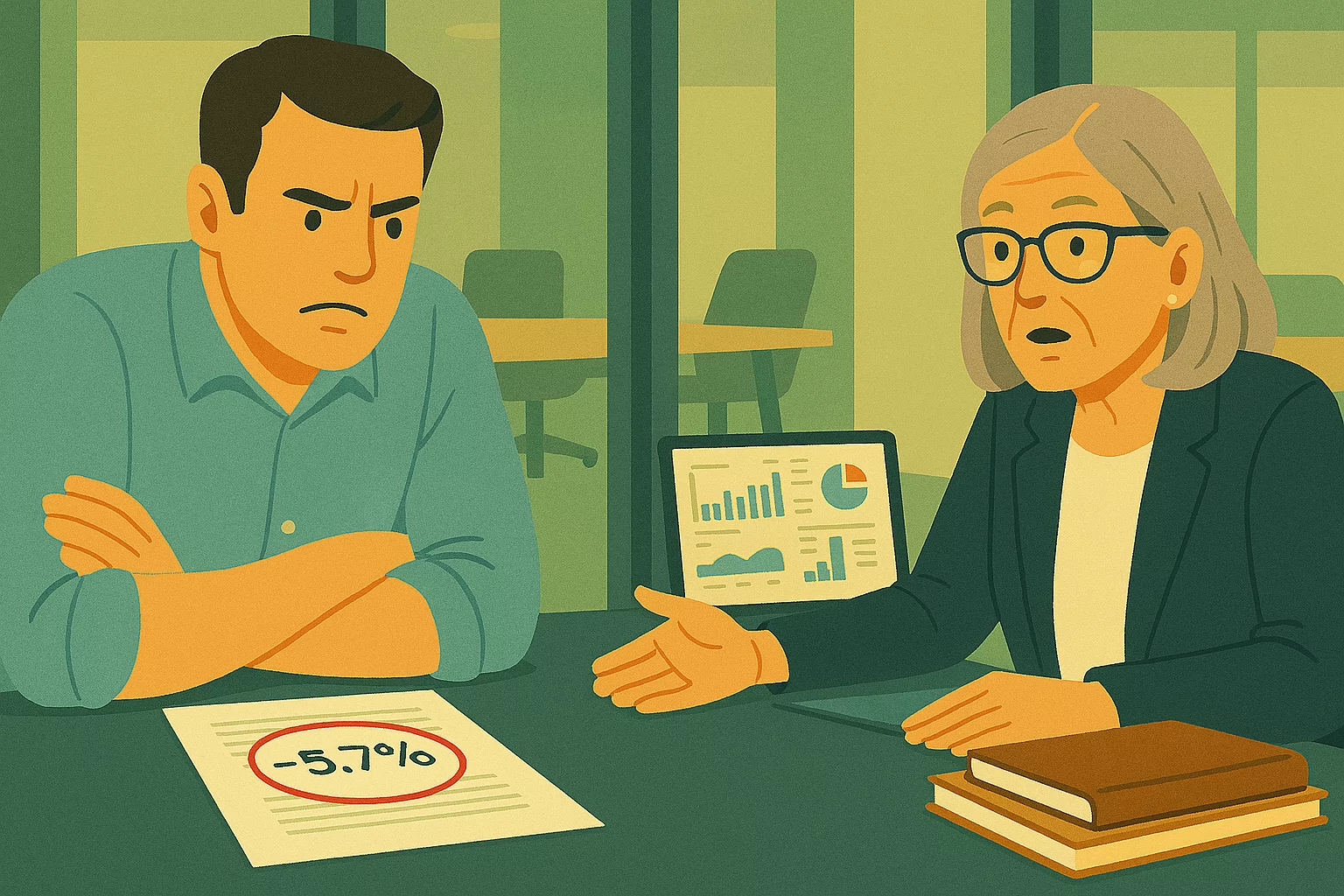
“Bias is often self‑limiting, and when we let it do the steering we cap the value we deliver to our teams and businesses.”
We all do it: reach for the tool, platform, or pattern we know best, convince ourselves it’s the best, and ship it. Sometimes that shortcut is pure professional instinct – the payoff of thousands of earned hours. Other times it’s bias masquerading as expertise. Telling the difference is where good judgement lives.
In this post I unpack the line between bias and experience, show how group dynamics can blur it further, and share simple habits that keep your recommendations fierce, fair, and future‑proof.
The same data, different posture
| Bias | Experience | |
|---|---|---|
| Source | Sub‑conscious preference, “the way we’ve always done it” | Deliberate pattern‑matching from varied past projects |
| Reaction to new context | Dismisses it (“That won’t work here.”) | Interrogates it (“How do the constraints change the playbook?”) |
| Language clues | “Trust me, I’ve used X for years.” | “I tried A, B, C – here’s why B fits us now.” |
| Risk | Locks options, breeds blind spots | Broadens options, surfaces trade‑offs |
Key tell‑tale: Experience cites contrasts; bias clings to a single story.
Why the line gets blurry
- Recency & familiarity effects. The last tool we shipped or conference talk we heard feels disproportionately “right.”
- Social proof in teams. Once two people nod, inertia does the rest.
- Success echo. Repeating a win is seductive – even when the variables changed.
Cognitive‑science backs this up. Reviews across management, finance, medicine, and law show overconfidence and confirmation bias consistently distort professional judgement (frontiersin.org).
Quick self‑check: Bias or experience?
Ask yourself (or your team) these five questions:
- Alternatives: Can I name at least two viable paths besides my favourite?
- Assumptions: What would have to be true for my choice to fail?
- Data: Have I validated the context with fresh evidence, not just memory?
- Voices: Have I invited a dissenting view and listened in good faith?
- Learning: If constraints shifted tomorrow, would I still pick the same option?
If you answer “no” to any, you’re probably sliding from experience into bias.
When group wisdom becomes team‑think
Trying to dilute one person’s bias with collective input can back‑fire. Classic “hidden‑profile” experiments found groups fixate on the information everyone already shares, ignoring unique insights – and so settle on mediocre decisions (journals.sagepub.com).
Add extroversion, perceived expertise, or loud job titles and the bias can snowball (researchgate.net).
Tip – Rotate the chair. Make the quietest voice moderator for a day. It forces hidden data to surface.
Habits that sharpen experience and check bias
| Habit | Why it works |
|---|---|
| Deliberate counter‑proposal – mandate that every recommendation include a credible “Plan B”. | Interrupts confirmation bias and widens the option space. |
| Decision journals – write down at the time why you chose X. | Later review separates lucky wins from sound reasoning. |
| Red‑team reviews – assign teammates to argue against the preferred option. | Teams that practice adversarial collaboration surface 30‑40 % more unique data points in trials (prc.springeropen.com). |
| Experience diversity audits – map the projects, domains, and tech each member has actually shipped with. | Highlights where the bench is deep – and where you’re short on vantage points. |
| Timeout tokens – give every participant a physical/virtual token they can spend once per meeting to pause and question direction. | Restores individual accountability inside collective decisions. |
Bringing it home
Experience is your super‑power – if it stays elastic. Bias is its shadow – rigid and self‑limiting. By noticing the clues, probing our own certainty, and structuring teams to surface dissent, we trade blind spots for insight.
So next time you feel the comforting pull of the familiar, pause. Ask the five questions. Invite the awkward voice. Your future self – and your business – will thank you.
References and further reading
- Berthet, V. (2022). The Impact of Cognitive Biases on Professionals’ Decision-Making: A Review of Four Occupational Areas, Frontiers in Psychology. (frontiersin.org)
- Bonner, B. L., & Sillito, S. D. (2011). Leveraging Member Knowledge in Group Decision-Making: Expertise, Extroversion, and Feedback, Group Dynamics: Theory, Research, and Practice, 15(3), 233‑245. (researchgate.net)
- Kakinohana, R. K., & Pilati, R. (2023). Differences in Decisions Affected by Cognitive Biases: Examining Human Values, Need for Cognition, and Numeracy, Psicologia: Reflexão e Crítica, 36(1), 26. (prc.springeropen.com)
- Stasser, G., & Stewart, D. (1992). Discovery of Hidden Profiles by Decision-Making Groups: Solving a Problem versus Making a Judgement, Journal of Personality and Social Psychology, 63(3), 426‑434. (journals.sagepub.com)